PLASTERBOARD

Plasterboard recycling plants and production of Gypsum Pellets and Paper Pellets
** DOWNLOAD PRESENTATION **
PLANTS FOR THE PRODUCTION OF
- RECYCLED GYPSUM PELLETS
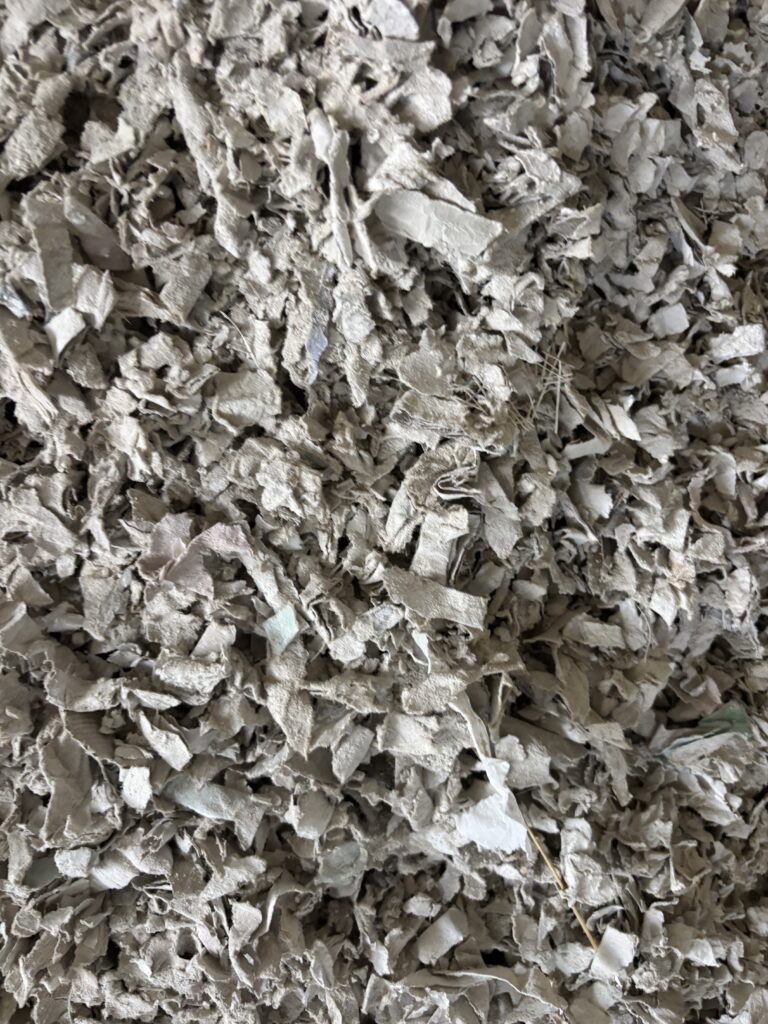
- RECYCLED PAPER PELLETS

recycled paper pellets

recycled gypsum pellets
Plasterboard Recycling and Pellet Production
✅ Target
- The plasterboard recycling process
The production of gypsum pellets and paper pellets
The environmental and economic benefits
📅 Step 1: Harvesting and Sorting
- Recovery of drywall from construction sites, demolition, and construction waste
- Removal of contaminants (plastics, metals, wood)
- Selection of suitable material for treatment
⚖️ Step 2: Grinding and Separation
- Initial shredding of material
- Mechanical separation between gypsum and paper
- Automatic light paper suction system
⚖️ Step 3: Drying
- Moisture reduction of separated materials
- Prevention of mold and improvement of pelletization yield
🏫 Phase 4: Gypsum Pellet Production / Gypsum Pellet Production
- Pelletization of Gypsum
Uses:- Cement industry
- Realization of new gypsum panels
- Stabilization of waste
🍃 Step 5: Paper Pellet Production
- Compaction of recovered paper fibers
Use as:
Biofuel
-
- Biofuel
-
- Raw material for paper mills
- Agricultural soil conditioner
♻️ Environmental Benefits
- Reduction of construction and demolition waste
- Recovery of up to 95% of materials
- Less use of virgin raw materials
- Lower emissions than landfilling
📈 Economic Benefits
- Valorization of a waste as a new resource
- New business opportunities in the circular economy
- Lower disposal costs for construction companies
🔍 Conclusion
Plasterboard recycling is a practical, sustainable and efficient solution for modern construction.
Investing in gypsum and paper recovery technologies means looking to the future of the environment and the economy.
Contacts and insights available upon request.